5 signs your water heater is about to fail
Age, rusty water, rumbling noises, water around the base and hot water that won't keep up: what each sign means and what to do next.
Sample content · general information, not advice for a specific home
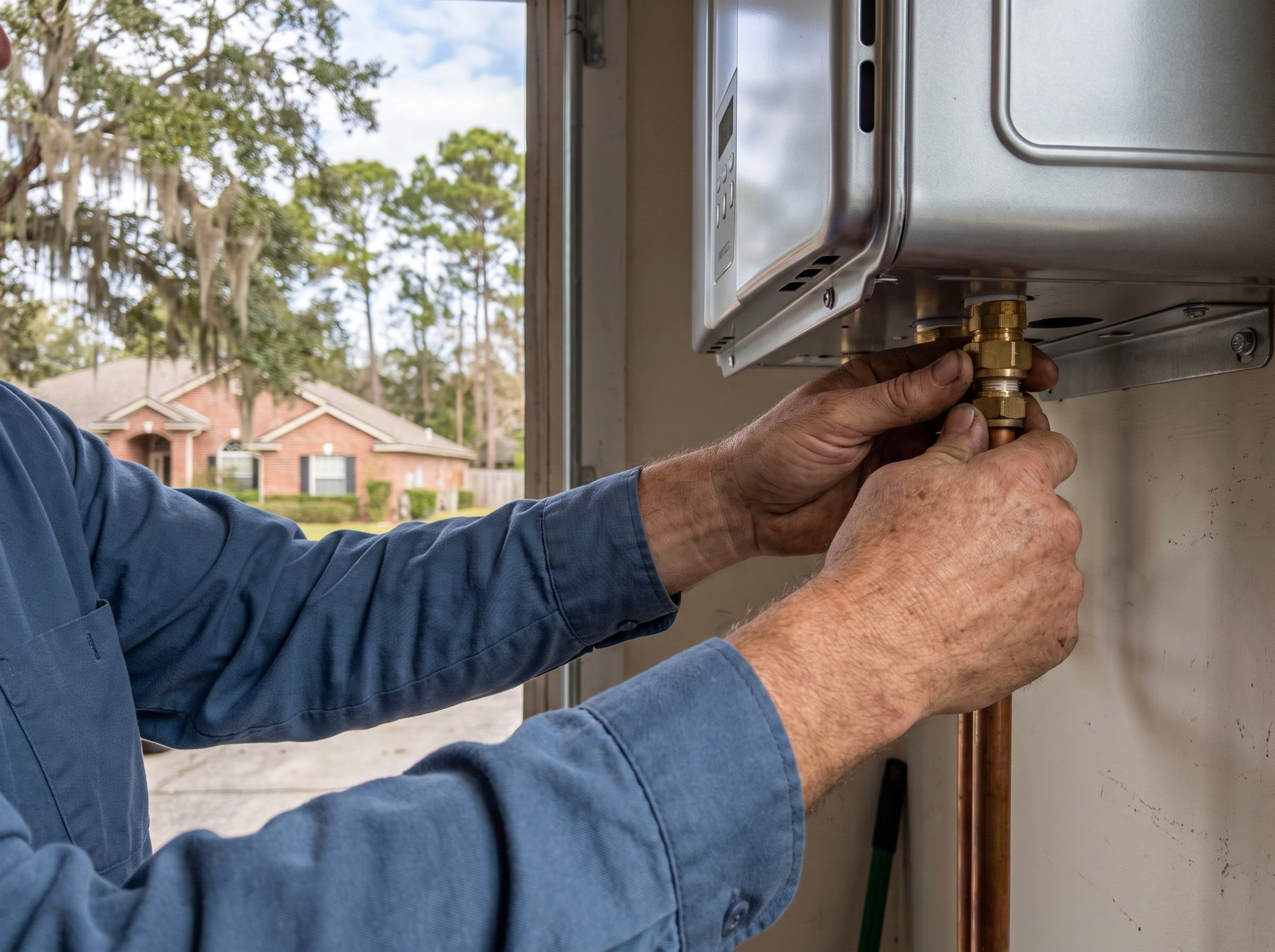
Most water heaters don’t fail without warning. They give you signs for weeks or months first. Here are the five we hear about most, what they usually mean, and what to do about each.
1. It’s getting old
Age is the biggest clue. Tank water heaters often last about 8 to 12 years; the U.S. Department of Energy puts typical tank life at 10 to 15 years. Tankless units usually last longer, often around 20 years.
Not sure how old yours is? Look at the label on the side of the tank. The manufacture date is often printed there, or hidden inside the serial number. If you can’t work it out, a plumber can read it for you in seconds.
An older heater isn’t automatically a problem. But if it’s past 10 years and showing any of the signs below, it’s worth getting a replacement quote before it chooses the timing for you.
2. Rusty or cloudy hot water
If water from the hot tap looks rusty while the cold runs clear, the inside of the tank may be corroding. Tanks have a sacrificial anode rod that corrodes instead of the tank; once it’s used up, the tank itself starts to go.
Caught early, replacing the anode rod can help. Once the tank is corroding, it’s usually time to plan a replacement.
3. Popping, rumbling or banging
Minerals in the water settle at the bottom of the tank as sediment. When the burner or element heats water trapped under that layer, you hear popping or rumbling.
Sediment makes the heater work harder and can shorten its life. Flushing the tank (draining some water out to carry the sediment with it) often helps if it’s done before the build-up gets heavy.
4. Water around the base
Not every puddle means the end. Water can come from a loose fitting, a supply line, or the temperature and pressure relief valve, which are all repairable.
But if water is coming from the tank itself, it can’t be patched. That’s a replacement, and it shouldn’t wait.
If you see water pooling under the tank: turn off the cold-water valve on top of the heater, then turn off the power (electric) or set the gas valve to “off” or “pilot”, and call a plumber.
5. The hot water can’t keep up
Running out faster than it used to, or water that swings between hot and lukewarm, can mean a failing heating element or thermostat (electric), a burner problem (gas), or a tank so full of sediment there’s less room for water.
On younger heaters these are usually repairs. On older ones, they’re often the first sign of the end.
What to do next
- One sign on a younger heater: usually a repair. Book a visit and ask what failed.
- Two or more signs on a heater over 10 years old: get a replacement quote, and a repair price too, so you can compare.
- Water pooling from the tank: shut it off and call now.
Not sure where yours falls? Our repair or replace helper asks four quick questions and gives you a plain-language suggestion.